Thursday, October 22, 2009

Space Links

.

Over the past few months, I've unveiled a few facts about the Solar system you don't know and might not be able to find from casual looking. This month, I want to give you some resources to look up some of this stuff, and to answer the questions that I'm intentionally not answering for you. There's a lot of cool stuff to know.

Did you know that it was because of studying Venus that we discovered the possibility of a runaway Greenhouse Effect? Did you know that the Sun has recently started doing some really strange things? Did you know that, even though the universe is about 14 billion years old, and that nothing can travel faster than light, it's 93 billion light-years across?


The Solar System is filled with fascinating and mysterious objects. Studying Venus was our first clue that a runaway greenhouse effect was possible, and is merely one tiny example of how studying our local space environment can help improve the quality of life on Earth. There’s lots more we need to know, not the least of which is WHEN (not IF) another huge rock is going to hit our planet. Earth is the biggest solid object in the Solar System, and as such, it gets hit far more often than smaller planets, and I think we can all see that the Moon has been hit quite a bit, with its giant craters, so it’s a good idea to find all the rocks that might hit us and get them moved out of our way. As cool as it would be to find aliens with the SETI project, I think this is a little more important.

In the past few years, we’ve built some very interesting telescopes that have allowed us to finally see planets revolving around other stars. We are finding them all over the place, with new ones being spotted literally every day.

We’ve spotted gigantic stars that are so huge they could engulf our Sun and all 9 planets. We’ve spotted star-sized diamonds. We’ve seen galaxies explode. We’ve seen objects traveling very nearly the speed of light. We’ve discovered gigantic black holes, and one of them is at the center of our own galaxy! We’re even peering back to the very beginnings of Time and the Universe themselves, and we’ve got a pretty good picture of how and when the Universe was born and how it’s going to die.

Astronomy is the biggest science, it has provided us with inventions like Velcro, scratch-resistant lenses, CCDs, and satellite protections against the Sun, and it receives very little funding for the myriad of benefits derived from its study. Here is a small list of some of NASA’s contributions to life on Earth.
With all the cool stuff that’s out there to explore, and all the useful stuff we’ve learned already, I don’t know why everyone isn’t trying to be an astronomer!

I’ll be adding more content here as I find interesting things that aren’t widely known; that’s what I’m all about: doing things no one or hardly anyone does. Those of you who want to know more incredible facts about our solar system, our galaxy, and our universe, would be well advised to visit these sites:

Wikipedia has lots of interesting articles, just do a search for the planet or star in question. Frex:
             Pistol Star
             What a black hole is
             What stars are
             The Pillars of Creation
             Mars
          Size of the Universe

This is just a SMALL sample of the awesomeness out there available for your discovery. And if you get the Science Channel, they often have astronomy-related programs to watch.

Oh, and if you want to feel small, watch this video.

_______


Further reading to whet your appetite for knowledge:
Solar System - Sun
Hey baby, what's your sign? (Updated!)
Solar System - Earth

.

Monday, October 19, 2009

Railroad Tycoon 2 Untold Strategies


.

There are a lot of strategy guides for Railroad Tycoon II out there. For those of you who still play Pop Top’s “Railroad Tycoon 2” game, and want to know how to be a better player, and don’t want to read rehashes the same old strategies repeated endlessly in everyone else's guides, I created my own huge personal strategy guide for Railroad Tycoon II and jam-packed it with tons of gamer-goodness!

I originally wrote it not long after getting out of the Navy, in 2001, and have added to it and updated it several times over the years because I still play it. As a result, it is probably the biggest, bestest game guide for Railroad Tycoon 2 anyone’s ever made. On top of giving you the best strategies for whipping up on Railroad Tycoon 2's butt, I've also cleared up a lot of misconceptions about the game, and even offer a few suggestions on how to perfect the game, just in case someone were to decide to try to turn the best railroading game ever made into an even better one. (That’s right, I consider RT3 and Sid’s Railroads to be steps backward.)

Want to build track efficiently? Want to operate your railroad efficiently? Want to break the other players and keep your railroading dream financed all the way to the Gold Medal? This is the guide for you!

And how much will this cost you? A lot less than you'd pay anywhere else. First, go to our More in Sanity Facebook Page and hit the LIKE button. You can read some of the articles the More in Sanity team has linked up for you if you want. Second, Click here to read the best strategy guide ever made for Railroad Tycoon II, or any other topic. Third, leave a comment below to let me know you liked it. And fourth, bookmark http://rt2p.mopjockey.com/ and check back now and then for updates. The best strategy guide does still receive improvements now and then, so kep up with them.

And if you'd be so kind, please ask your friends to LIKE the More in Sanity Facebook Page too. And now that I have Twitter, you can Follow me. And don't forget to visit the Hawk and Badger Railroad for scenarios. Thanks a bunch!

If you don't have Railroad Tycoon 2 yet, I can help you out with that, and it's dirt cheap. The Platinum Edition is the most up-to-date version released, and has has everything you could ever want. I've also linked up a few other such games, including the Eagle Games boardgame, plus a couple other games for comparison if you really want to see why I prefer RT2.

Want to share this great guide with someone? Here's the link: http://rt2p.mopjockey.com/


_______

More articles which will interest or entertain you:
My high-scores are Better than Yours
10-4 Good Buddy!
Civilization 5 Got Blasted
You Might not Know how to Drive

.

Webster's Rejects

.

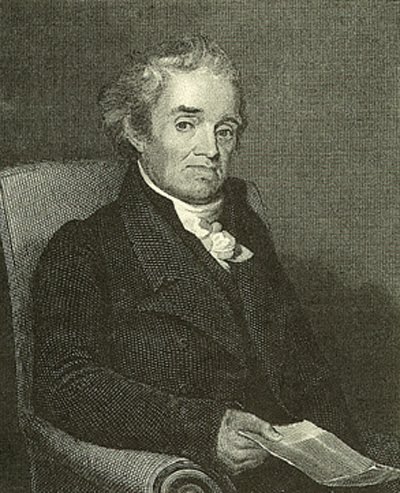
Do you remember the unusual word definitions from Reader’s Digest, Boy’s Life, and Cracked many years ago, published as if they were jokes? One of these magazines referred to such definitions as “Daffynitions”, others used some other name, but really, these words have been around for a long time, long enough that Noah Webster, author of the first dictionary, considered and rejected them. I have collected these for many years, and I now unleash them all on an unsuspecting public.

I originally created this around 2000, and posted it on my site a couple years ago. I occasionally find new words that need to be added, but there are plenty I don't add. I don't add the thematically-based ones, like "Log-on: add wood to the fire, Log-off: remove wood from the fire, Mouse: a critter that eats your food" etc.

Click here to go right to it!


.

Wednesday, October 7, 2009

Games I Play - Civilization 4

.

Civilization 4 is an awesome computer game, and I say that not just because it's really cool to play, but also because it's so FREAKIN' HUGE!!!

I don't get much chance to play it any more, but back when I did, I was pretty good at it, and I was also a regular on the CivFanatics forum, as TheDS. (I still occasionally stop by there to see how everyone's doing.)

I wrote a couple good articles on how to play the game, one entitled My Religious Experience, and the other entitled How to Pop your Borders Quickly, plus a number of useful mod suggestions to the game that might make it better. (And lets not mention all my sarcastic comments over the years, okay?) And fairly recently I finally got around to releasing my Reference Sheet from Hell, which is the most complete set of reference information available for Civ4 and its Beyond the Sword expansion.

Then back in June (2009), my buddy Dan Quick of Apolyton fame asked me to cohost his podcast show and I couldn't say no, seeing as how I'm a big fan of Civilization 4 and know a lot about it. (PSST! It's Episode #71!) For those of you who are interested only in my brand of general mayhem, and/or want to hear me tease poor Makahlua half to death, the first few minutes and the last few minutes are non-Civ-specific and most entertaining. Dan puts out one of these programs every other week, and he's got about 3 years he's been doing it now. I was invited to do another one a couple weeks ago, but unfortunately I couldn't make an appearance. I might make one in the next 4-6 weeks, though, but no promises. Thanks, Dan, for the opportunity to be a part of this!


So what's so freakin' awesome about Civilization 4 (+ the BtS expansion)? I could go on for a LOOOOOOONG time about how Sid Meier et al have outdone themselves, but I'll just say this: I like strategy games like this which are so huge that you can't possibly hold it all in your head at once. I'm no grandmaster at Chess, but nowadays, Chess bores me most of the time. (Don't tell my mom and dad!) I need something a little more interesting, and Civ4 fits the bill. You build your civilization from the dawn of time to the launch of the first starship, and over the course of this multi-day journey, you make tons of decisions, trying to wring the most efficiency out of your nation as you can under the circumstances you're faced with (terrain, neighbors, resources, random events, etc, etc, etc) and hopefully you make the right decisions that put you at the top of the heap and you conquer the world or you are the first to colonize another planet.

There is so much to see and do that you can play it with many different strategies, and indeed, that's one of the tenants of the way I play: I have a central strategy I use, but each game I change at least one thing to see what happens. One game I may try to conquer everyone, another I may leave them all alone, another I may try to control the oceans, another I may try to spread my religion(s) to all corners of the globe, another I may try to strangle the world economy, another I may nuke all my enemies, and so on and so on. There are LOTS of different strategies to try! How could you ever get tired of a game that's never quite the same twice?

Granted, this game isn't for everyone. I know someone who can't stand to play any particular game for more than about an hour (so you know he doesn't like Mega-Monopoly at all), and I know people who are even more in depth in their strategies than I am. Me, I design techniques and then use them. I want to get on with subjugating my enemies and ruling the world through military/economic/religious/diplomatic/scientific means, not analyze every little detail for hours. (I'll do that when I'm not in the middle of a game!)


Oh, and you can learn a lot about history by playing it, thanks to the built-in encyclopedia. Wouldn't want to play as Hannibal and not know what he and Carthage are famous for, would we?

Check it out!

To assist you, I've linked up Civ4 Complete, which has both of the Civ4 expansions, plus it's also got the new Colonization in it. They also have apparently released an album of music, so I linked that up for you. And if you have a game machine, you can play Revolution and tell me how you like it. (I haven't got a game machine.)

Thursday, September 24, 2009

Trucks trucks everywhere! Part 1

.

“30,000 pounds... of mashed... bananas” - Harry Chapin

Driving a truck isn’t for sissies. Most of you know that intellectually, but few of you appreciate it in your gut. What I’d like to do here is three important things: first, give you an appreciation for what it’s like to be a truck driver; second, help you if you want to be a truck driver; and third, provide a few useful resources to existing truck drivers to help them do their jobs better, safer, and with greater job satisfaction. Plus, the unwritten guarantee that we’ll entertain and educate!

I've got a few articles for you, and today's is about what it's like to BE a truck driver. Read on!

Stupid people are trying to kill you
I can't count the number of times I've had people do their level best to get either me or themselves killed. Sure, you've probably seen a trucker or two doing something crazy, and it sticks out in your mind because there's so few of them, but the overwhelming majority of truckers take their jobs seriously and drive safely. There are thousands of accidents every year, and trucks are in a disproportionately small fraction of them - that is, if trucks represent 25% of the vehicles on the road, significantly less than 25% of accidents involve trucks. But you can be sure they'll make the news! Of top of that, in accidents that do involve a truck and a car, over 90% of the time, it's the car-driver's fault; however, you can be sure the truck driver will be the one to take the blame. He went through a school to learn how to drive, he gets a year's experience driving every month, so obviously it's the fault of the guy who knows what he's doing, and not of the guy who cut him off.

Okay, so let's talk about that headline.

Crappy drivers try to kill you
I've had plenty of people drive crazy around me. I've had people jump in front of me and slam on their brakes in front of me when I was rolling down a hill at 70 mph because they wanted to make an illegal U-turn. (That person was lucky my brakes and experience were better than his!) I've had lots of people cut me off, or nearly hit me, or sit beside me for several miles or any number of other things.

You're driving a 40 ton vehicle, surrounded by 1 and 2 ton vehicles. You've got to be careful, because they get their licenses from a cereal box, and if you get into an accident, it doesn't matter who was really at fault, you're going to take the blame.

Politicians try to kill you
There are lots of restrictions on where you can take a truck, and few of them are made out of any sense of practicality or your living conditions. There are places where you can't idle your truck. Hey, when it's 50 below, I tell you what, governor of New Jersey, I'll trade beds with you. I'll let you sleep in my truck without any generator or heat, while I sleep in your bed with your wife watching your TV using your bathroom and your shower. Or when it's 100 or hotter, you can sleep in that oven and I'll enjoy your air conditioner.

Let's get realistic here. If you really expect to make a dent in pollution (which is what the no-idling laws are supposedly about), do something intelligent for a change. Ticket cars that belch more smoke than any 100 trucks on the highway. Insist trucking companies install an electrical plug that can power the truck's heater, a/c, and accessories, and then install outlets in truck parking spaces. Then we can just plug in and we don't need to run our engines. That would save a lot of diesel too.

The next thing some of them do is tell you that you can only park for a couple hours in a rest area. How idiotic is that? Federal law requires us to stop and sleep for 10 hours. Where are we supposed to do that? These states aren't exactly brimming with truckstops. Wasn't there some rest area funding bill passed recently because some trucker got killed because he couldn't find a proper place to park for the night?

On top of that, some states restrict a truck's speed. I can't think of anything more dangerous or wasteful of resources on the highway than a slow-moving vehicle on the same road with a lot of fast-moving vehicles. The fast vehicles get all clogged up behind the slow vehicles, wasting everyone's time, and what if someone's not paying attention? They're going to ram right into that slower vehicle, and with a huge speed difference, like 15 mph in some cases (California), that means the car driver is going to die. Considering all the attention that gets focused on insignificant dangers, I don't see why this huge one is ignored.

And let's not even mention the lane restrictions. Through 99% of the cities, a given truck is just trying to drive straight through it. Considering the amount of energy required to get one of these things moving, it makes a lot more sense to dedicate the HOV and express lanes to trucks, not to cars. Get those trucks through so they don't waste time clogging up the highways.

Hollywood turns the world against you
Has there ever been a movie with a truck in it that didn't paint the truck as some all-powerful force of nature and use that to scare the crap out of the viewers?

Your company tries to rip you off
And they usually succeed!

There's this myth that truckers make a lot of money, and therefore trucking companies spare no effort to rip you off. Same for the truckstops. But 95% of truckers are just as broke as the rest of us, if not moreso, because considering how long we have to be out there to get our paycheck, we don't even make minimum wage.

But the problem is that most of us are paid by the mile, and in every case, those miles get shorted. It's just the way the companies do business. You get a load that requires you to drive from the north side of Chicago to the south side, you drive 50 miles, but you don't get paid for any of them because both locations are within the city limits of Chicago. That's an extreme example, but it happens.

And then they make you sit for long periods. Most companies claim to pay layover - that is, if you sit for more than 2 days, you get paid, because bill collector's don't accept "my company doesn't feel like paying me for all the time they expect me to be available out there but they won't let me do any real work". So they make you sit for a day and a half, and then they assign you a load that doesn't pick up for a couple days, and then they give you 5 days to make a 2 day drive. You're sitting 7 days and not getting paid for any of it. Now this is a rather extreme example, and it doesn't happen that way very often, but I'm no stranger to sitting 2-3 days per load without getting paid, and then being given a short run.

Your customers are all different
The majority of the places you go to pick up or drop off do things largely the same, but there are plenty of exceptions. What one will insist you do, another will forbid, and a third will cry bloody murder! It's rather silly; I'd think they'd want to improve efficiency rather than attack it, but I guess that's just me.

Kids love you
It's not all bad, of course. I don't think there's a month that goes by where I don't have some kid(s) asking me to toot my horn at them, and I'd say I average about once a week. It's fun!

You get to travel
I like traveling, and so do a lot of other people. In a given month, you're likely to drive as many miles as most people do in a whole year, and I've gotten to see quite a few interesting things in my time. I've also had the good fortune of being able to visit many friends and family members over the course of my driving days that I otherwise would not have gotten to see.

It's a bit isolating
You're away from home several weeks at a time. You drive about 10 hours and do some work for another four, and by the end of the day, you're tired and just want to sleep. Weeks can go by without you noticing. It's hard to have a lot of friends, unless you already made them before you started driving, and if you live someplace like Florida, where you don't get to go very often, then you don't get to see them. I happen to have family and friends scattered all around the country, but if you've got all your eggs in one basket, you'll never see them but once every month or two.

And unless you've got someone to take care of your affairs while you're on the road, you're going to get behind on your bills too.

There is variety
There are different types of driving jobs. There are local drivers who are home every night. It's not much different than any other job, except you drive a truck.

There are regional drivers, who stay within a few states and are home on the weekends.

And then there are the OTR drivers, who drive all over the country and only get home once every month or two. This one is the roughest on your social life, but it also gives you the best opportunity to see things you've never seen before.

Overall
Okay, so let's break it down. On the bad side, there are stupid people trying to kill you or otherwise make your job harder and more obnoxious than it has to be. It can be a real downer if you focus on it. However, you get a lot of interesting opportunities. You see things you've never seen, wake up to different scenery outside your window every morning, and if you're big on chatting, you encounter thousands of people each year. My first year driving a truck, I saw a dozen family members I hadn't seen since I was little, made a few dozen new friends, saw a few old friends from the Navy, and saw a lot of places few other people get to see. I discovered an awesome chain of Mongolian barbecue restaurants, took pictures of a couple hundred cities in 40 states, explored several towns and cities, and discovered all kinds of interesting tourist spots I can come back to in later years when I have a car.

It's rough some times, but ultimately I feel like I got paid to take a long vacation.

Next time: Next time I'll talk about how to get your start as a trucker, and later, I'll provide some trucker resources, including a list of free wifi locations you can make use of.

.

Tuesday, September 22, 2009

Solar System - Venus

.

Things you don't know about the Solar System

I've always found space fascinating, and among my first books was a book about astronomy. It was just a small, general guide that had a number of interesting facts about the solar system and the stars and galaxies. This was 1980 or before, and we've made a LOT of discoveries since then, and I've kept up on it, partly thanks to Ars Technica, the Science Channel, and NASA.

I'm going to present a few curious things to you about what surrounds you that I'll bet you don't know. It's time to discover the hottest planet: Venus.

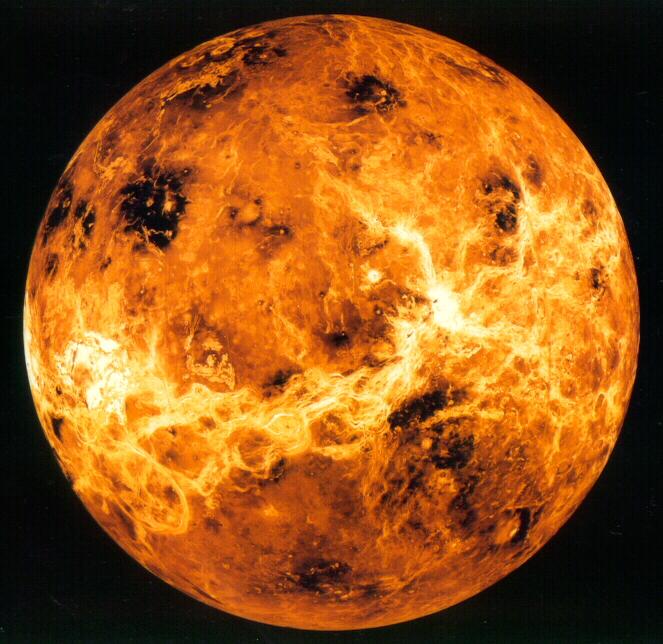
Known in ancient times as both the Morning Star and the Evening Star, Venus is one of the brightest objects in the sky. When Galileo turned his telescope upon it, he discovered that it went through phases, just like the Moon. It does this because it's closer to the Sun than we are - Mercury also goes through phases, but the outer planets do not.

Better telescopes revealed that Venus was about the same size as Earth, and that it was covered in clouds. It gained the name of Earth's Twin, or even Sister Planet, because of this. It was believed for a long time that with it being of similar size and with clouds that it was probably like Earth, only warmer. When space probes finally reached it, they discovered it was just about the worst place you could be! The temperature was over 800 degrees - hotter than Mercury even though it's twice as far away from the Sun! - and the atmosphere was crushing - 90 times the pressure of Earth's atmosphere - and it was mostly carbon dioxide, plus the winds were constantly howling at supersonic speeds and the clouds were too thick for much light to get to the surface.

It wasn't until we started turning our radars on the planet that we made an interesting discovery: Venus rotates backwards! Very slowly! They also discovered something else: Venus always points the same face at Earth.

Okay, that's not precisely true; here’s a more accurate statement: When Venus is closest to the Earth, it always points the same face at Earth. Because Venus is so covered in clouds that we can’t ever see the surface, except by bouncing radar signals off it, we didn’t know this until fairly recently.

Some of you may be aware that Venus rotates “backwards”, or “retrograde”. The Earth and most other solar-system bodies, when viewed from above the North Pole, spin counter-clockwise, but Venus spins clockwise instead. The Sun, if it was visible from Venus’ surface, would go from west to east.
Venus needs 225 Earth-days (about 7.5 months) to revolve around the Sun, and 243 Earth-days (usually listed as -243 days to denote that it rotates backwards) (about 8 months) to rotate 360 degrees. Its “day” is a little longer than its “year”.

Because it takes Venus 2/3 of an Earth-year to rotate, and about that long for Venus to go around the Sun, Venus comes closest to Earth in the same part of the sky every 2 Earth-years. In this time, Venus has gone around the Sun 3 times and also had three full “days”. The same side of Venus is always facing toward Earth when the two approach!

Future study of the planet is likely to reveal that this is not a coincidence, but rather that there is probably a concentration of mass on Venus that Earth “grabs onto”, in much the same way as the near-side of the Moon is heavier than the far side. Over billions of years, Earth’s gravity grabbed hold of these mass concentrations and caused both Venus and the Moon to always face this way on a regular basis. Chances are good that in its past, Venus rotated much like Earth does, then got hit by something big enough to cause it to slow down enough for Earth to grab hold of it and create this interesting 3-to-2 resonance.

I'm going to tell you one more interesting thing about Venus that you don't know: It's possible to live there without terraforming it. How? I'm glad you asked!

You know that Earth's atmosphere is about 100 miles thick, right? And that the higher you go, the thinner the air is, right? The same is true of other planets. Even though the atmospheric pressure on the surface of Venus is 90 times that of Earth, a few dozen miles above that there is a point where it's a lot closer to Earth-normal pressure. By living in what amounts to giant balloons, we could build floating habitats - not much different from living in ships, which we do all the time here on Earth. The conditions in this band are a lot less hostile. The temperatures are better, and the clouds and storms are at a lower level, so it's calmer too. Plus, it's a lot easier to gather sunlight! It might even rain real water up there!

Okay, that's all I've got from Venus for you. Later!

_______


Further reading to whet your appetite for knowledge:
Solar System - Earth
Solar System - Mercury
To Your Health - Part 2

.

Saturday, September 19, 2009

You Might not Know how to Write in the English Language

.

 
Things you Might not Know


In my travels about the Earth, I have uncovered various truths. It seems there are a lot of people out there who aren’t aware that they don’t know how to drive, or that they don’t know the value of a dollar, or various other Earth-shattering problems. To help regular folks find out if they know this or not, I created some questionnaires so my friends and fans could find out if they are afflicted with these dangerous or inconvenient problems. We’re all often blind to our own problems, right? So take these tests to find out yours.

You Might not Know how to Write in the English Language

1. Have you ever used “should of”, “could of”, or “would of” when you meant “should’ve”, “could’ve”, or “would’ve”? (Double points for this question.)
2. Do you refuse to use any sort of punctuation, so that your readers have to guess where sentences begin and end?
3. Are you a stranger to lower case letters?
4. Are you a stranger to upper case letters?
5. Do you use apostrophes to denote all your plurals?
6. Do you shun the use of the ENTER key, or perhaps use it for just about every sentence?
7. Have you ever used “quote marks” to denote emphasis, rather than underlining, bolding, or italicizing?
8. Are you unaware that when used in that way, quote marks are being interpreted as Yarights? As in, “No” dumping gets read as “yeah, right, go ahead and dump”.
9. Do you despair that handwritten signs don’t come with spell-checkers?
10. Have you ever misspelled “school” when painting it on a road?
11. Do you not know the difference between your, you’re, and yore?
12. How about to, too, and two?
13. Or accept and except?
14. Or they’re, there, and their?
15. Perhaps affect and effect confuse you?
16. Are you frequently accused of being dyslexic, while ACTUAL dyslexics go unnoticed?
17. Have you ever used the word “literally” as an exclamation rather than to denote that something you were saying actually happened and was not just a clever turn of phrase?
18. Would your English teacher cry if she knew how many times you answered yes to these questions?

Scoring
0             Excellent! You probably know how to write in English.
1-2         Please ask your English teacher to smack you upside the head and then teach you what you slept through the first time.
3+          Please refrain from all written communication without a paid transcriptionist assisting you.

Here's a few language tools to help you out.

Saturday, August 22, 2009

Solar System - Mercury

.

Things you don't know about the Solar System

I've always found space fascinating, and among my first books was a book about astronomy. It was just a small, general guide that had a number of interesting facts about the solar system and the stars and galaxies. This was 1980 or before, and we've made a LOT of discoveries since then, and I've kept up on it, partly thanks to Ars Technica, the Science Channel, and NASA.

I'm going to present a few curious things to you about what surrounds you that I'll bet you don't know. It's time to discover the planet closest to the Sun and therefore the hardest to observe: Mercury.


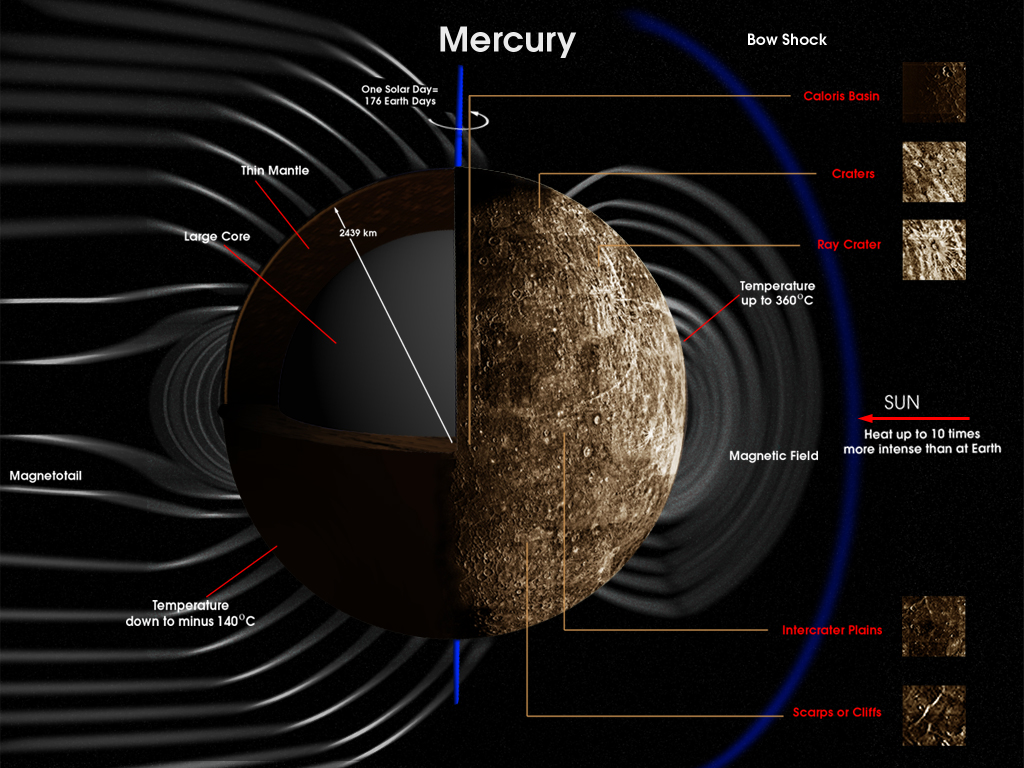
Mercury is the fastest planet, swinging around the Sun in just under 3 months. It's so close that it's within the Sun's warped space. For a long time, people thought there was an even-closer planet that was perturbing Mercury's orbit, a truly hellish world they dubbed Vulcan.
However, Vulcan was never discovered, because it wasn't there to be found, yet Mercury's orbit was still not conforming to Newton's predictions. Something else was going on. It wasn't until Einstein's Theory of Relativity that the answer was found.

You've heard that a circle is 360 degrees around, right? Well, massive objects like the Sun distort the space around them. Close to the Sun, where Mercury is, a complete circle is slightly less than 360 degrees, and as a result, Newton couldn't predict where Mercury would be.

Here's something else you don't know about Mercury: it experiences a double sunrise and a double sunset every day. How? This will only take a moment to explain.

Mercury is a big rock, much like the Moon, except it’s really hot because it’s so close to the Sun. The Earth’s distance to the Sun, the famous 93 million miles, has a much easier name to remember, called the AU, which means Astronomical Unit. Earth is 1 AU from the Sun. Mercury is about 2/5 of this distance, and as a consequence, it zooms around the Sun in only 88 Earth-days, which is just under 3 months.

Mercury rotates very slowly compared to Earth. The Earth rotates in 24 hours - one day - but Mercury needs about 59 Earth-days to turn a full 360 degrees. This means a Mercury-day is very long, about 2 months.

Did you notice something there? Its day is 2 months and its year is 3 months? That means that Mercury has 3 “days” for every 2 “years”. Those are incredibly long days!

One other thing you need to know: in its travels around the Sun, Mercury’s orbit is not a perfect circle. Sometimes it’s closer to the Sun than normal, and sometimes it’s farther away. When it’s closer, it goes faster, and when it’s farther, it goes slower. This makes its orbit somewhat elliptical.

You’re already aware that the Moon always keeps the same side facing the Earth, right? This is because the Moon’s “day” is equal to it’s “year”. However, because the Moon also doesn’t have a perfectly circular orbit, this means that sometimes the Moon goes faster and sometimes it goes slower, and because of this, it’s possible to see more than 50% of the Moon’s surface from Earth over the course of a year. Here’s a page and animation I found that explains and shows this wobble...


When Mercury rotates, the Sun comes up over the horizon very slowly. When it is close to the Sun, its increased orbital speed is fast enough that when seen from the ground, the Sun goes back down! Then when the planet moves farther away from the Sun, it slows down and now the sunrise can continue. The same thing happens in reverse on the other side of the planet with the sunset.

To put it another way, the Sun heads west across the sky, then when Mercury is close to the Sun and outrunning its rotation, the Sun goes east for a while, then when Mercury moves away from the Sun, the Sun heads west again.

And so, Mercury’s double-sunrise and double-sunset are caused by this combination of very slow rotation, very fast revolution around the Sun, and orbiting faster than it can spin for a small part of the local “day”.
It’s important to note that, because of the relationship between its “day” and it’s “year” — it’s a ratio of 3 to 2 known as a resonance — this means that these doubles are visible only from small portions of the planet’s surface, and nowhere else. Anywhere else on the day side, you’ll instead see the Sun going backwards for a little while before it resumes its trek across the sky. This isn’t like a Solar eclipse of the Moon, which can happen pretty much anywhere on Earth in narrow swaths for a given event; if you build your house somewhere on Mercury where you saw a double-sunrise, you’ll always be able to see these double sunrises from your house every other “year”.

I haven’t done the math to see if double-sunrises and double-sunsets can be seen from the same locations, but it seems unlikely.

Bonus points for those of you who were also able to figure out that, on certain small locations on the Moon, you can watch the Earth rise and fall over the horizon over the course of a lunar “day” in the same manner!

I think that's enough knowledge to boggle your mind about Mercury. Next up: Venus.

_______

Further reading to whet your appetite for knowledge:
Solar System - Venus
Solar System - Sun
To Your Health - Part 1

.

Wednesday, August 19, 2009

You Might not Know the Value of a Dollar

.


Things you Might not Know

In my travels about the Earth, I have uncovered various truths. It seems there are a lot of people out there who aren’t aware that they don’t know how to drive, or that they don’t know the value of a dollar, or various other Earth-shattering problems. To help regular folks find out if they know this or not, I created some questionnaires so my friends and fans could find out if they are afflicted with these dangerous or inconvenient problems. We’re all often blind to our own problems, right? So take these tests to find out yours.

You Might not Know the Value of a Dollar

I have to wonder if I’m the only person who has ever had to struggle with money, as in, not having a lot of it. I was born in the lower middle class, I’ve had to ask my mom not to buy me Christmas presents so she could pay the heating bill, and my sister says I can get 15 cents out of a dime. If you have any reason to believe that you don’t know the value of a dollar, please take this test and keep track of the YES answers. Scores will be tabulated at the end.

This one is a bit more difficult to do, because inflation drives prices up constantly. Frex, I haven’t paid more than $6 for a 24-pack of pop EVER, nor will I pay more than about $1 for a regular Arby sandwich. I also frequently shop for computer components at Newegg because of their excellent service and they usually have the lowest price. I shop at Walmart for their low prices, and their lack of price-increasing, privacy-invading “discount” cards too. But because people are willing to pay ever-higher prices for things, they continue to rise, and stores that overcharge continue to do business, and so it’s impossible to say “If you pay more than $6 for a 24-pack of pop, you might not know the value of a dollar” because in a few years, that price may be impossible to find. I’ve been paying that (or less) for most of my life, and if it becomes impossible to do so, then I’ll simply do without. So few people are willing to do without unimportant things, though.

So instead of saying how ridiculous you have to be to pay $2 for a candy bar, I have to be more general.

1. Do you frequently shop at the convenience store?
2. Do you ever buy refreshments while at the movie theater?
3. Have you ever bought anything, especially food, at an interstate rest area vending machine, or a toll road service area?
4. Do you hate coupons or sales?
5. Are you usually the first to own some cool new thing, like a spiffy new game, game machine, computer component, music CD, car, or some other thing that will have its price cut in half next month but you’re too anxious to own it right now?
6. Have you ever used a “buy one get one free” coupon to buy a 69 cent hamburger when you could have instead used it to buy a 5 dollar double quarter pounder with cheese?
7. Have you ever been named customer of the year?
8. Do you buy your gasoline at the expensive stations when the station across the street is selling the exact same gasoline for 20 cents less per gallon?
9. Do you shop at supermarkets that have “discount cards”?
10. Are you unaware that even WITH that discount card, you could probably still get a better price somewhere else?
11. Do you shop at the mall a lot, when there are discount outlets nearby you could go to instead?
12. Are you afraid to buy things over the internet?
13. Do you play the lottery regularly?

Scoring
0             Excellent! You probably know the value of a dollar.
1-2         You’re not very savvy with your cash.
3+          Please hire me to do your shopping for you. I’ll get you the exact same stuff, you’ll pay the exact same price, and I’ll keep the savings. I’ll make millions in just a few days!

Wednesday, July 22, 2009

Solar System - Sun

.


Things you don't know about the Solar System

I've always found space fascinating, and among my first books was a book about astronomy. It was just a small, general guide that had a number of interesting facts about the solar system and the stars and galaxies. This was 1980 or before, and we've made a LOT of discoveries since then, and I've kept up on it, partly thanks to Ars Technica, the Science Channel, and NASA.

I'm going to present a few curious things to you about what surrounds you that I'll bet you don't know. Let's start with the giver of all known life: the Sun.


The Sun is a great big ball of hot gas that sits at the center of our solar system. All the planets orbit around it. In fact, we call it Sol, and that's where the name Solar system comes from, but it's a term that, at least in science fiction circles, is used to describe any star and its orbiting companions.

The next thing you don't know about the Sun is that there is an area outside the Sun that is much much hotter than the surface. The surface is in the range of 11,000 degrees Fahrenheit, but the corona, which surrounds the Sun, is a couple MILLION degrees! How can this be? So far, no one knows.

The last new thing I'm going to tell you about the Sun (for now) is that, for a long time, there have been some missing neutrinos. A neutrino is a tiny particle that can pass through practically any amount of matter without noticing it - a wall of lead several LIGHT-YEARS thick, would be needed to ensure all neutrinos were blocked - and so they are a good indicator of what's going on inside the Sun. It takes a photon - a particle of light - millions of years to reach the Sun's surface, but neutrinos pass through without delay.

For a long time, scientists' theories on how the Sun worked required that it produce a certain number of neutrinos per hour, but they were only able to detect about 1/3 as many as they predicted they would. Just recently, they came upon the solution: there are three different KINDS of neutrinos, and we could only detect one of those three. But now that we can detect the other two, we've found that the Sun is producing as many neutrinos as were predicted.

Oh, okay, one more thing to add. I recently saw a movie with a really stupid plot - or rather, a plot with no basis whatsoever in science. It seems an alien robotic race built a huge weapon on Earth that was capable of destroying the Sun. Yeah. Um, hey, Michael Bay, do you have any concept what would be required for the Sun to even notice us? Let's see some numbers:

The Sun weighs a third of a MILLION times the Earth. That's not 10 times, not 100 times, not 1000 times, that's about 333,000 times! If we gathered together every single nuclear weapon ever built, that would be a force of about 10,000 megatons of TNT. The "Dinosaur Killer" asteroid was 10,000 times as much as that, or about 100 million megatons. In a single second, the Sun produces another 1500 times as much energy, or about 150 billion megatons. Every single second! I don't care what you say, your Sun-destroyer is a pop-gun, and just using it would have to blow up the planet. Dude, stars eat planets without noticing. You're not going to blow one up with a big gun. God, man, think for a change!

And before you can say "antimatter", to produce that kind of energy is equivalent to denotating 4 million tons of antimatter per second. The only way you're going to create that kind of energy is with another star. Everything else literally pales in comparison.

Ok, that's all for the Sun and my rant about junk-science. Now let's move onward and outward, to Mercury!

_______

Further reading to whet your appetite for knowledge:
Solar System - Mercury
Space Links
To Your Health - Part 1

.

You're Wondering what this Place is all About

Do us a Small Favor, Please:

Terms of Use - legally binding; sadly necessary